1.Match Color and Undertone
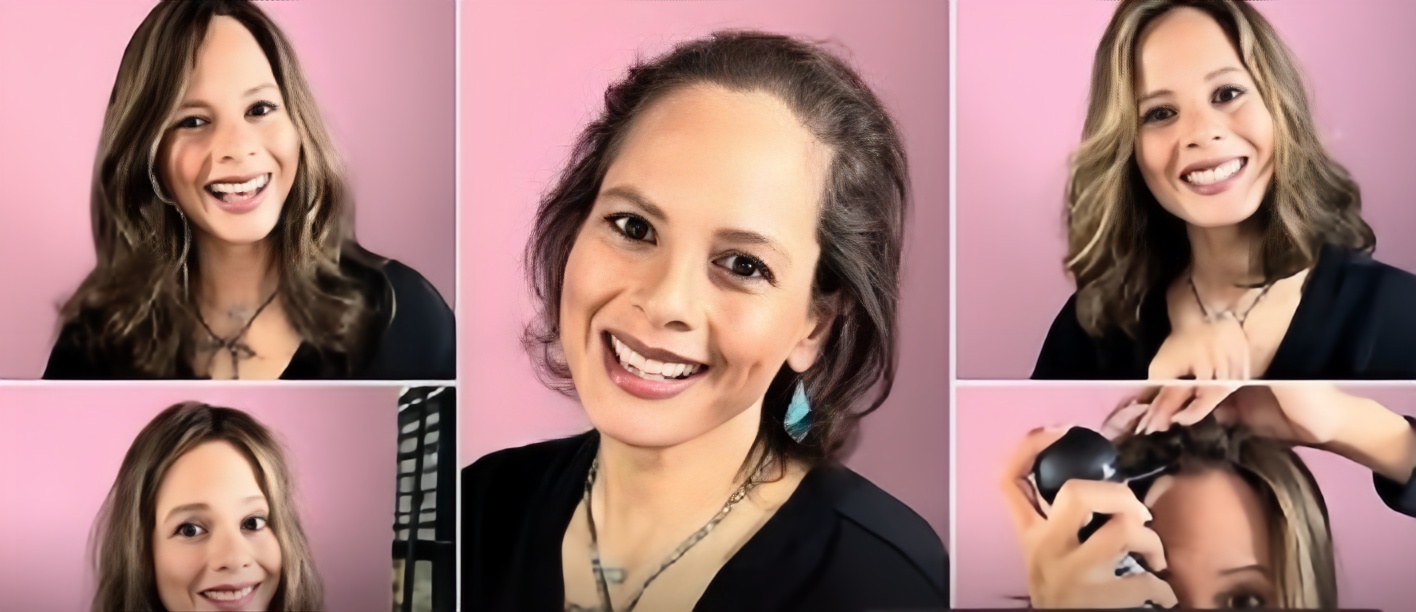
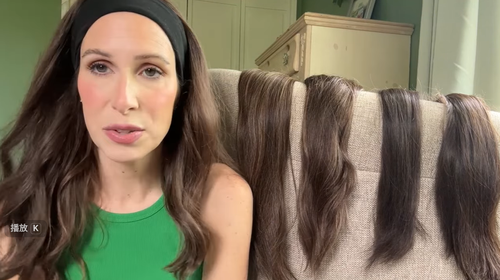
Accurate color matching is the foundation of natural blending. Choose a topper that matches not only your base color but also the undertone (warm, cool, or neutral). Multi-tonal hair toppers are often more effective than single-shade options because they mimic the natural variation found in real hair.
When possible, check the color in natural lighting rather than indoor lighting, which can distort tones. If you are between shades, a slightly lighter option is usually easier to blend than a darker one. Proper color matching reduces visible contrast at the part line and along the edges.
Hair Topper Color Matching Guide
| Types | Key Tips | What to Avoid |
|---|---|---|
| Lighting for Color Check | Check the topper color in natural lighting | Judge the shade only under indoor lighting, which distorts tones |
| Shade Selection | If between shades, opt for a slightly lighter topper for easier blending. | Avoid choosing a drastically darker shade that creates harsh contrast. |
| Match Color & Undertone | Choose a topper matching your base color and undertone (warm, cool, neutral). Multi-tonal toppers blend better than single-shade ones. | Avoid ignoring undertones or picking only by approximate base color. |
2.Customize the Cut
Most toppers are not designed to perfectly match your haircut straight out of the box. Trimming and layering are essential to avoid harsh lines or uneven lengths. A topper that sits on top without blending into your haircut will appear separate rather than integrated.
For best results, have a stylist shape the topper while it is being worn. This ensures the layers connect naturally with your existing hair. This step is especially important for human hair toppers, as they can be cut and styled just like natural hair for a more seamless finish.
3.Style Hair and Topper Together
- Avoid Separate Styling Never style your natural hair and hair topper individually, as this will lead to mismatched texture, volume, and overall shape. To eliminate this issue, always style the two together using the exact same hair tools and styling techniques. This simple step lays the groundwork for a fully unified hairstyle.
- Use Heat Styling for a Cohesive Finish Heat styling is highly effective for both clip-in hair toppers and human hair topper styles. Straighten or curl your natural hair alongside the topper at the same time-this step fully merges the two sections and erases any visual gaps between them, resulting in a smooth, all-over blended look.
- Opt for Soft Waves to Hide Transitions Soft waves are the most foolproof styling choice for seamless blending. This gentle curl pattern effortlessly disguises transition lines and attachment points, while adding natural, flowing movement throughout the entire hairstyle. It works for nearly all hair lengths and topper styles.
- Prioritize Consistent Texture Consistent texture is the key to a believable finish. Even if you have a perfect color match between your natural hair and topper, the entire look will appear unnatural and fake if the two have conflicting finishes, curl patterns, or textural vibes. Keep every styling step uniform to maintain a cohesive appearance.
4.Improve Root Blending with Hair Building Fibers and Flat Iron
Flat roots are one of the main reasons hair toppers looks noticeable, especially around the part line. Studies indicate that over 60% of an unnatural appearance comes from root contrast rather than hair length. Using HAIR BUILDING FIBERS helps reduce the visible difference between the scalp and the topper, creating a softer and more natural transition
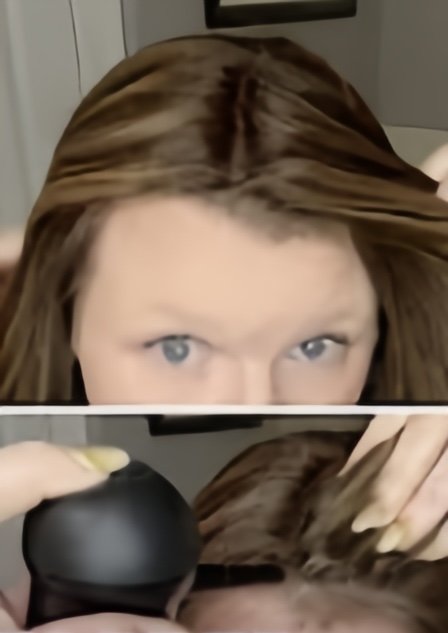
A flat iron can also be used to slightly bend or lift the roots, allowing the topper to follow the direction of your natural hair. This method is especially effective for a hair topper for thinning crown, as it softens the base line and prevents the topper from sitting too flat against the scalp.
5.Adjust Placement
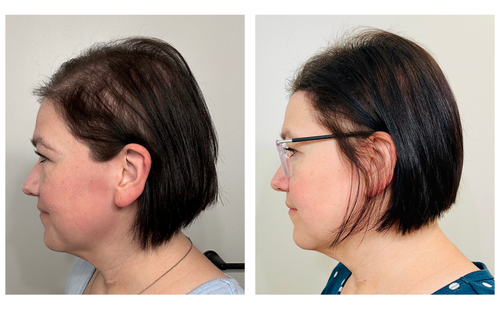
Placement directly impacts how natural your hair topper looks — follow these quick tips for a fully undetectable finish.
- Choose the right placement type Slightly behind the hairline: place the topper 1–2 inches behind your natural hairline for a balanced transition. At the hairline: position the topper at the front for maximum coverage, but only if the match is precise. Crown placement: place the topper on the crown to target thinning areas while keeping the natural hairline visible. Match your part: align the topper with your natural part to avoid visible separation. Adjust as needed: make small position changes to improve blending under different lighting conditions.
- Align the parting with your natural hair flow Adjust the topper’s parting to match your natural hair growth direction. A mismatched parting looks obvious, so matching your usual part ensures smooth blending.
- Make small placement tweaks Even tiny position shifts improve blending, especially around the crown. Adjust gently until the topper lies flush with your real hair, with no gaps or lifted edges.
- Follow your natural growth pattern Place the topper to fit your hair’s natural growth, not against it. This keeps it fully integrated, and works for all clip-in and lace-based human hair toppers for woman.
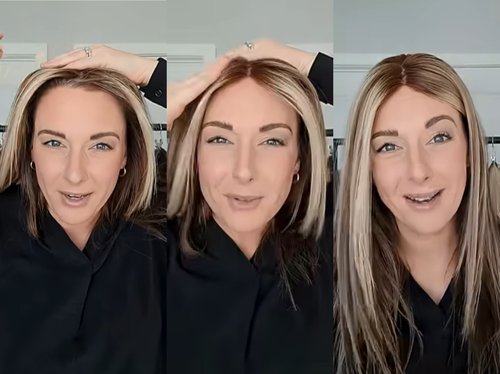
How to Choose the Right Hair Topper?
Choosing the right topper reduces the effort required for blending and improves the final result.
- Base size: Select a base that matches the area you want to cover, especially for crown thinning
- Hair type: Human hair toppers provide more natural movement and styling flexibility
- Attachment method: Clip-in styles are easier to apply and adjust
- Style options: Consider hair toppers with bangs if you want easier front blending
Hair Topper Types and Blending Difficulty
Different types of hair toppers vary in how easy they are to blend.
| Type | Blending Difficulty | Natural Look | Best Use |
| clip on hair topper | Low | Medium | Quick daily wear |
| human hair toppers | Medium | High | Long-term styling |
| hair topper for thinning crown | Medium | High | Targeted coverage |
| hair toppers with bangs | Low | High | Hairline blending |
Common Blending Mistakes
Avoid these common issues to improve results:
- Incorrect color matching
- No layering or customization
- Flat or compressed roots
- Incorrect placement
- Texture mismatch between hair and topper
Key Takeaway
Natural blending depends on color, cut, texture, and placement. Small adjustments in these areas can significantly improve how hair toppers integrate with your natural hair.