If you’ve noticed changes in your hair or just want to try a different look without cutting or dyeing it, you’ve probably seen wigs and hair toppers everywhere. They may seem to do the same thing at first, but they’re actually designed for different situations once you look closer.
This is especially obvious when looking at hair toppers for women because the choice isn’t just about appearance. It’s about how much of your own hair you still want to use and how natural you want things to feel in daily life.
Don’t treat them as similar options; look at when each one fits into real life instead.
1. The Difference Between Wigs And Hair Toppers
Let’s not overcomplicate this.
Hair toppers are basically made to work with your own hair. They don’t replace everything. Instead, they sit on top of the areas where hair starts to look a bit thinner, usually around the crown or parting. The goal is pretty simple, just to add some fullness where it’s needed, without covering everything else.
Wigs are the opposite. They don’t rely on your natural hair at all. You put one on and it takes over the whole look, from the front hairline all the way to the back. Everything is included in one piece, so your own hair basically disappears underneath.
So one is more like support; the other is more like a full replacement
2. Hair Toppers for Women: Who Are They Best For?
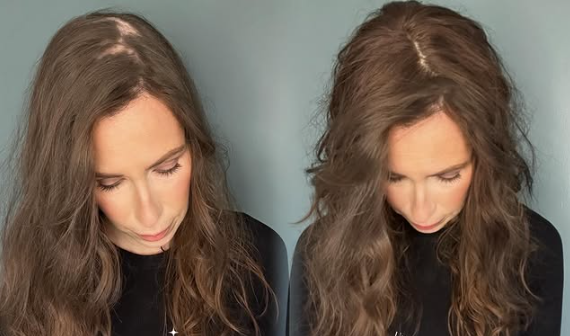
Hair toppers are especially popular among women who are not experiencing full hair loss but still want to improve volume and coverage in specific areas.
Suitable for:
- Early to moderate hair thinning
- Thinning at the crown, part line, or top area
- Women noticing reduced hair density due to aging or stress
- People who still want to keep most of their natural hair visible
- Users looking for a lightweight everyday solution
- Those who want a more natural look without wearing a full wig
Lifestyle fit:
Hair toppers for women are often chosen by individuals who want something simple and low maintenance. They can be clipped on in minutes, making them suitable for daily wear, work, or casual outings without requiring a complete restyle routine.
Key advantages:
- Lightweight and breathable
- Blends naturally with existing hair
- Less heat and scalp pressure compared to wigs
- Easy to put on and remove
- More natural appearance when color-matched correctly
Because they integrate with your own hair, hair toppers often feel less noticeable in daily life, which is one of their biggest advantages
3. Wigs: Who Are They Best For?
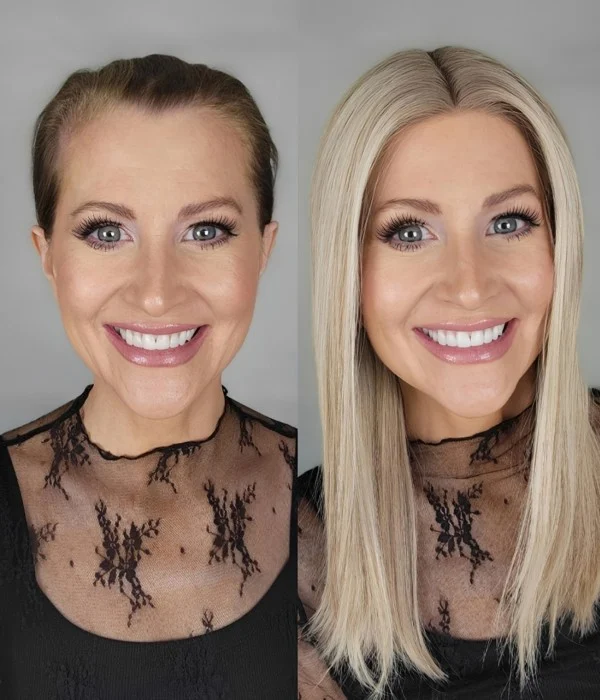
Wigs serve a different purpose and are typically used when natural hair is very limited or completely absent.
Suitable for:
- Advanced hair thinning or total hair loss
- Medical-related conditions such as alopecia or chemotherapy-related hair loss
- Women who prefer a complete style change
- Users who want to avoid daily styling of natural hair
- Those who want to experiment with different looks without altering their real hair
Lifestyle fit:
Wigs are often chosen for convenience and versatility. Instead of blending with natural hair, they create a fully finished hairstyle instantly. This makes them especially useful for people who want consistency or need a protective solution for their scalp.
Key advantages:
- Full coverage of the entire head
- Wide variety of styles, colors, and lengths
- No need to match with natural hair texture
- Quick transformation without salon visits
- Helpful for protecting natural hair from damage
Modern wigs are designed to look more realistic than ever, making them a strong option for both fashion and medical needs.
4. Hair Toppers vs Wigs: Detailed Comparison
| Feature | Hair Toppers | Wigs |
| Coverage | Partial (top or crown only) | Full head |
| Natural hair required | Yes | No |
| Weight | Very light | Medium to heavier |
| Breathability | Higher | Varies by cap type |
| Daily comfort | Very high | Moderate to high |
| Styling flexibility | Depends on natural hair | Fully independent |
| Best use case | Thinning hair | Hair loss or full transformation |
| Learning curve | Easy | Slightly higher |
5. How to decide between them
This is usually the part people get stuck on, but in reality it’s not as complicated as it sounds.
If your hair is still generally there but just feels thinner than before, then hair toppers for women usually make more sense. They don’t change your whole appearance; they just quietly fill in the areas that feel less dense, so everything looks more balanced without doing too much.
But if your hair has already reached a point where covering only certain areas doesn’t really help anymore, or you just don’t want to deal with blending your natural hair every day, then wigs are probably the easier route. You just put it on, and the whole look is done.
A simple way to think about it is if you still want your own hair to be part of the look, go with toppers. If you’d rather not think about your natural hair at all, go with wigs.
Final thoughts
At the end of the day, this isn’t really about which one is better. It’s more about what kind of experience you want when you look in the mirror every morning.
Some people feel more comfortable keeping their natural hair in the picture and just improving what’s already there, which is where hair toppers for women fit in quite naturally. Others prefer a clean switch, where everything is handled in one step, and that’s where wigs make more sense.
Both are valid, just used in different ways. Once you match it with your actual hair situation and daily routine, the choice usually becomes much clearer than expected.